How to Wear South Indian Saree: A Complete Style Guide for Timeless Elegance
Sarees are more than just traditional attire in India—they are a celebration of culture, craftsmanship, and femininity. Among the many regional styles, South Indian silk sarees stand out for their rich textures, vibrant colors, and regal appeal. Worn for weddings, festivals, religious ceremonies, and special occasions, South Indian sarees symbolize grace and heritage passed down through generations.
If you’ve ever wondered how to wear South Indian saree correctly and stylishly, this detailed guide will walk you through everything—from draping techniques to styling tips—while also helping you understand how South Indian draping differs from North Indian styles.
Understanding the Beauty of South Indian Sarees
South India is home to some of India’s finest handloom sarees. Kanchipuram silk from Tamil Nadu, Kasavu sarees from Kerala, Ilkal from Karnataka, and Pochampally from Telangana are admired worldwide for their craftsmanship.
What makes South Indian sarees unique:
- Pure silk fabric with zari work
- Bold borders and contrasting pallus
- Traditional motifs inspired by temples, nature, and mythology
- Heavier drape that gives a structured, royal look
Because of their rich fabric, learning the correct draping style is essential to enhance their beauty.
South India is home to some of India’s finest handloom sarees. Kanchipuram silk from Tamil Nadu, Kasavu sarees from Kerala, Ilkal from Karnataka, and Pochampally from Telangana are admired worldwide for their craftsmanship.
What makes South Indian sarees unique:
- Pure silk fabric with zari work
- Bold borders and contrasting pallus
- Traditional motifs inspired by temples, nature, and mythology
- Heavier drape that gives a structured, royal look
Because of their rich fabric, learning the correct draping style is essential to enhance their beauty.
How to Wear Saree in South Indian Style

The South Indian saree draping style is elegant, traditional, and slightly structured. It highlights the saree’s border and pallu while offering comfort and poise.
Step-by-Step Guide to Wearing a South Indian Saree
1. Start with the Petticoat and Blouse
Wear a well-fitted blouse and a matching petticoat. The petticoat should be tied tightly at the waist, as South Indian silk sarees are heavier.
2. Tuck the Saree at the Waist
Begin by tucking the plain end of the saree into the right side of the petticoat and wrap it once around your waist from right to left.
3. Make Neat Pleats
Create 5–7 even pleats (about 4–5 inches wide). Make sure the borders align perfectly—this is a key detail in South Indian draping. Tuck the pleats slightly to the left of the navel.
4. Draping the Pallu
Bring the remaining saree around your waist and place the pallu over your left shoulder. In traditional South Indian style, the pallu is often left long or pinned neatly without pleating to show off zari work.
5. Secure the Look
Use safety pins at the pleats and shoulder to keep the saree in place. Adjust the length so it lightly touches the floor.
Styling Tips for South Indian Saree Look
- Pair with temple jewelry or gold jewelry
- Opt for jasmine flowers (gajra) for your hair
- A center-parted bun or braid complements the look
- Choose bold makeup with defined eyes and a bindi
This draping style is ideal for weddings, classical dance events, and religious ceremonies.
How to Wear Saree in North Indian Style
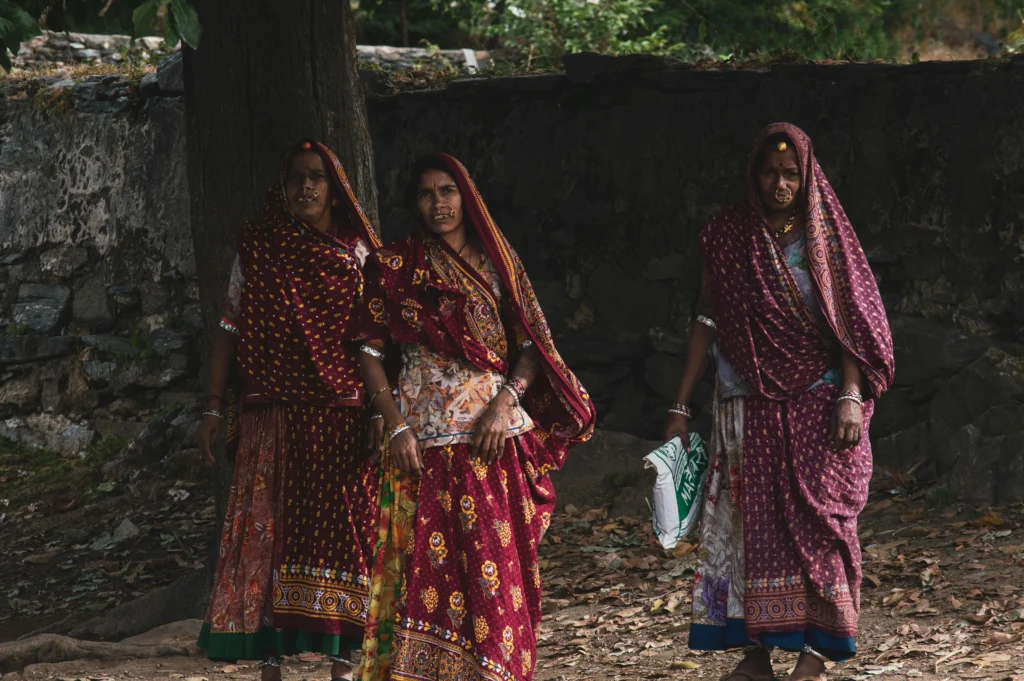
While South Indian draping emphasizes structure and tradition, the North Indian style focuses on flow and elegance.
Key Features of North Indian Saree Draping
- Pallu is pleated and pinned over the shoulder
- Lighter fabrics like chiffon, georgette, and silk blends
- Modern and versatile look
Step-by-Step Guide to North Indian Saree Style
1. Tuck and Wrap
Tuck one end of the saree into the petticoat and wrap it around the waist once.
2. Make Front Pleats
Create neat pleats and tuck them slightly to the left of the navel.
3. Pleated Pallu Style
Pleat the pallu neatly and pin it over the left shoulder. The pallu length usually falls till the waist or knee.
4. Optional Modern Touch
You can drape the pallu across the arm or leave it open for a contemporary appearance.
When to Choose North Indian Style
- Parties and social gatherings
- Office or formal events
- Lightweight sarees and fusion blouses